Why adopt a greyhound?
You might have noticed that we’re pretty passionate about greyhounds here at the Greyhound Hub. As well as building helpful resources for greyhound owners, we also want to highlight all of the reasons why these dogs make such amazing companions, to help encourage prospective adopters!
In this guide, we’ve picked out the top reasons why you should consider adopting a greyhound, based on our own experience as greyhound owners and conversations with others.
They have incredibly unique characters
From teeth chattering when they’re excited, to learning to play with toys for the first time, to roaching out on the sofa after a long day of doing nothing, greyhounds are the goofiest, most charming dogs you’ll ever meet. Many people see them as quite “serious” dogs due to their background in racing, but this couldn’t be further from the truth! In just a year since adopting, our greyhound has brought so much laughter into our lives.
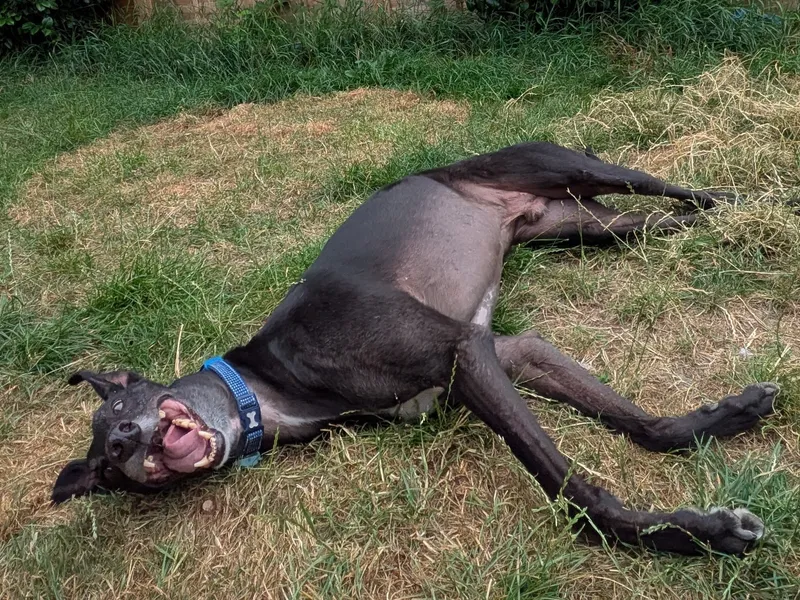
They need fairly little exercise
Famously referred to as the world’s fastest couch potato, greyhounds have low exercise needs relative to many other dogs. Most are happy with a few short, gentle walks per day. There will be exceptions to this rule, but if you’re looking for a laidback walking companion, greyhounds are a safe bet.
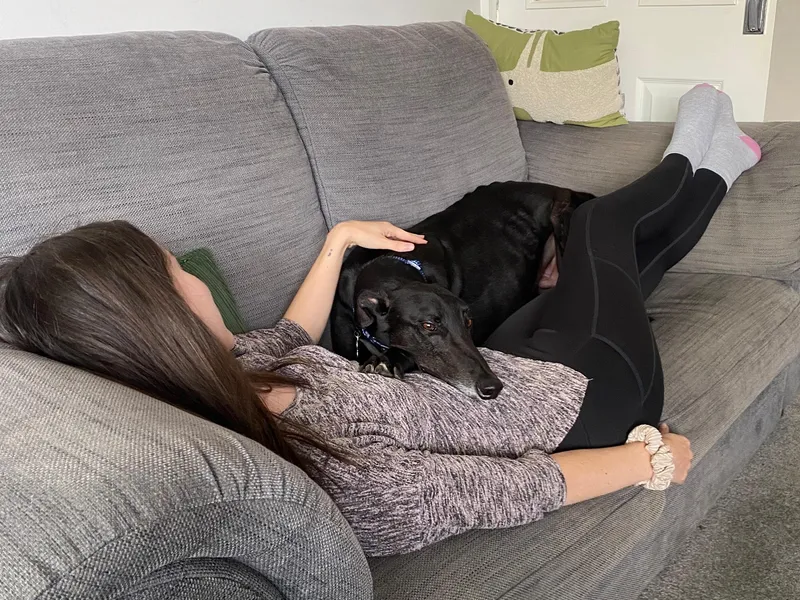
They make great napping partners
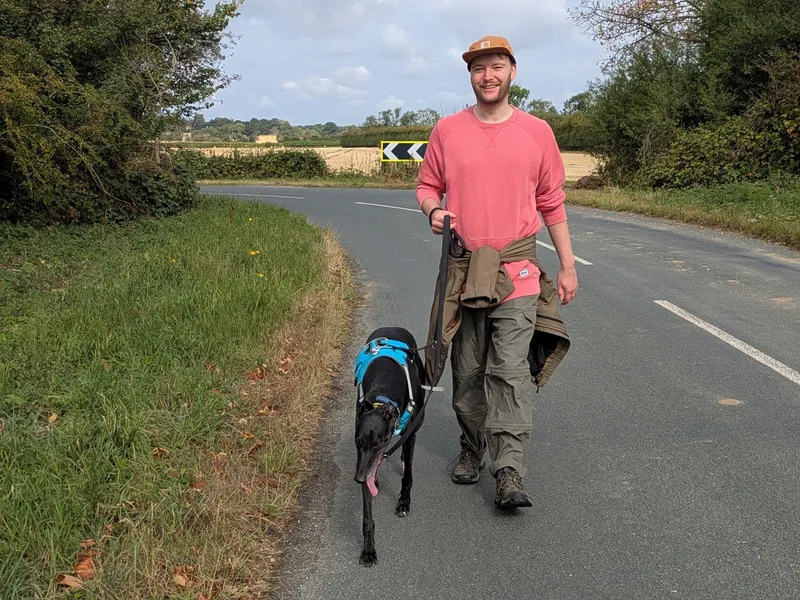
On top of their low exercise needs, greyhounds are extraordinarily lazy. 16+ hours of sleep per day is expected.
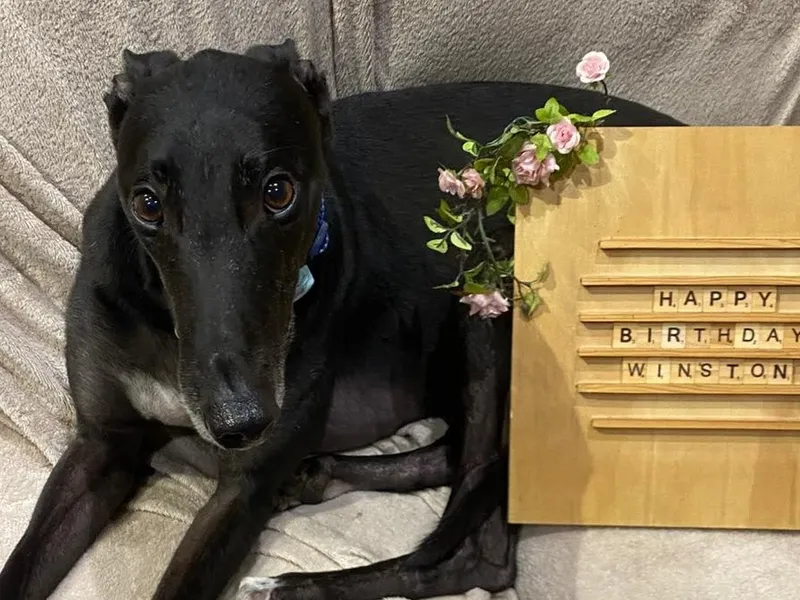
We once hired a sitter for Winston and one of her comments was “I’ve never known a dog sleep so much”. Sadly there is no award for sleeping the most, but if there was, a greyhound would win.
They can live in small spaces, including flats
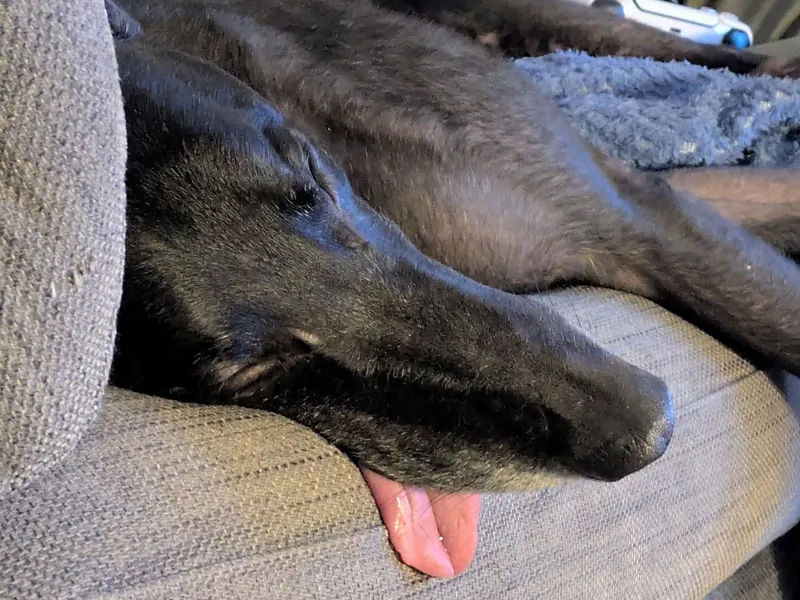
Despite their size, greyhounds need surprisingly little space. They fold up small when they want to and spend most of their time lounging around. As long as they have a comfy, quiet place to relax, greyhounds are happy in most spaces - from houses to flats.
They have low grooming needs
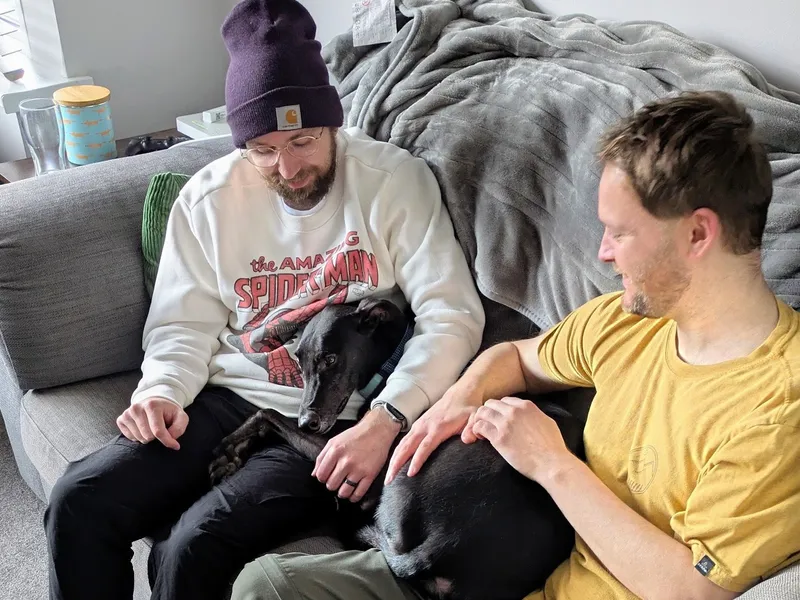
Greyhounds don’t require regular professional grooming (or any professional grooming, really). They have short fur and no undercoat, and lack the “doggy smell” that you notice with most dogs.
Routine greyhound grooming looks like:
- Regular brushing to dislodge any loose fur (weekly is enough)
- Toothbrushing, at least once a week but ideally every day if they will tolerate it
- Nail trims every few weeks
- Regular ear checks and cleaning if they need a wipe
- Clean their paws after walks, especially if it’s muddy
- Full baths can be every few months, or a couple of times a year, or even just “when they need it” (i.e. if they get dirty while out and about). - Infrequent bathing is actually preferable as you don’t want to dry out their skin or strip the natural oils from their fur.
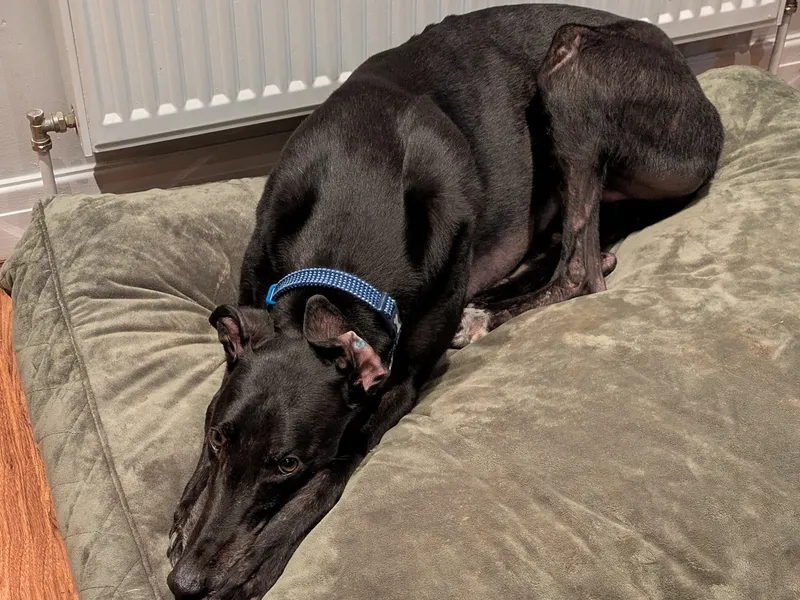
Greyhounds (typically) shed less than many other dog breeds
Thanks to their short coats and lack of undercoat, greyhounds do not shed a lot (relatively speaking - they definitely still shed!).
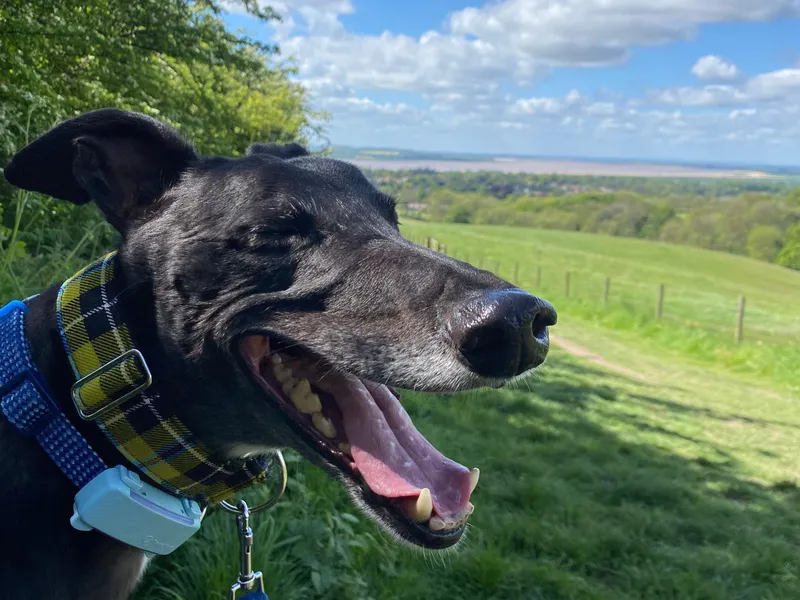
They’re surprisingly intelligent, quick learners
Greyhounds are often mistaken as being ignorant or slow to learn, but actually they are very clever and quick learners. They are bred to be highly independent, which means that they don’t seek to please their owner in the same way that many dogs do, and it can take some trial and error to figure out what motivates them. But once you’re on their wavelength, they learn new commands and routines very quickly.
We’ve found that our greyhound is a quick learner, but it’s very much on his terms! For example, he can learn a new command in the space of an hour or two, but his consistency is questionable when there is something better on offer. For example, calling him to come outside for his final toilet of the night can be a tough sell when it’s cold outside and he’s already cosy on the sofa!
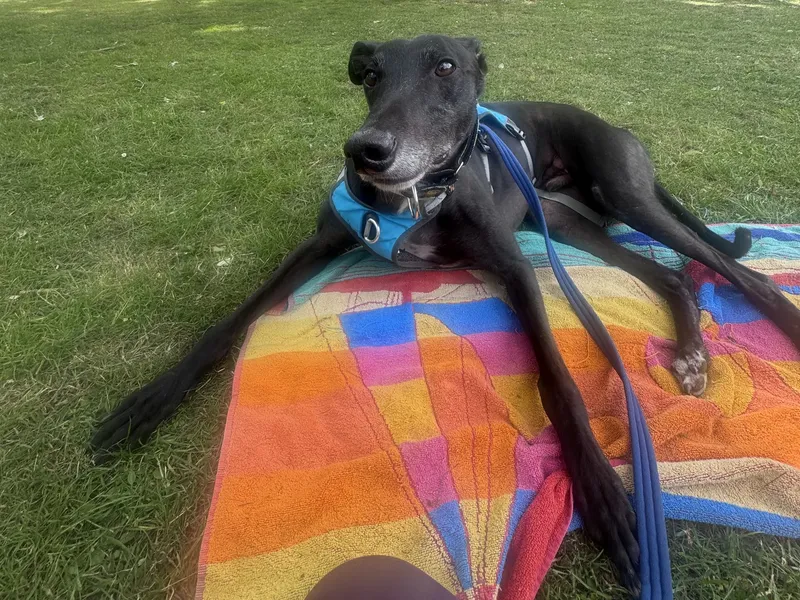
Some greyhounds can live with cats
Many people will immediately write off adopting a greyhound if they already have a cat. This is understandable, given the high prey drive that racing greyhounds are known for. However, there are ex-racing greyhounds who are capable of living with cats - you may just need to look a little harder or wait a little longer to find the right one.
Reputable rescues and rehoming centres will cat-test their greyhounds and guide you through the introduction process, to ensure everyone is safe and happy!
They’re (typically) great with people, including groomers and vets
First up: I know this is not a universal truth! Some greyhounds are terrified of the vets, or even people in general. But for the most part, ex-racers are well-socialised with humans and used to being handled regularly, therefore they’re typically very tolerant of having nails clipped, teeth brushed, physical check ups, vaccinations, etc…
Our Winston is the best example of this. He is weirdly excited to go to both the vets and the groomers. We go past the groomers on his daily walk and he will literally stop outside their house and want to go in, because he loves it so much. In the waiting room at the vets, he’ll be pulling on the lead to get in the consultation room as soon as the door opens. It’s weird, but great!
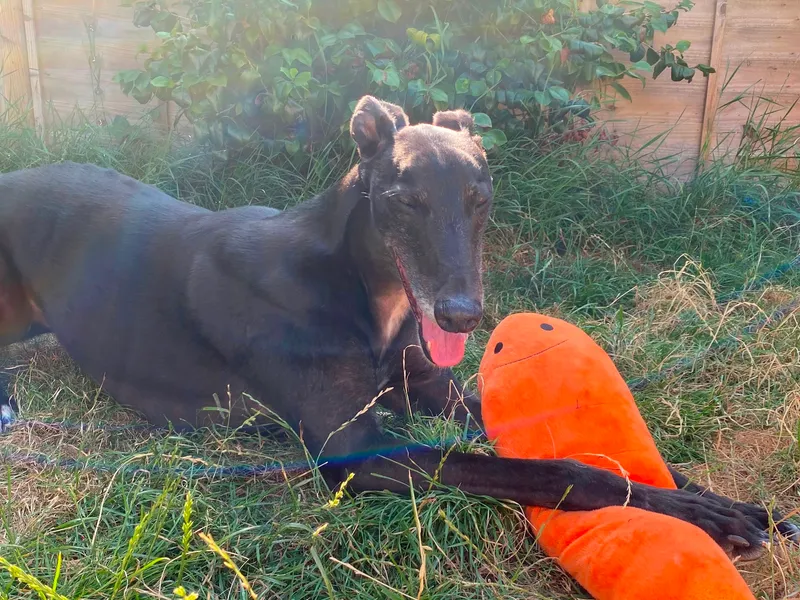
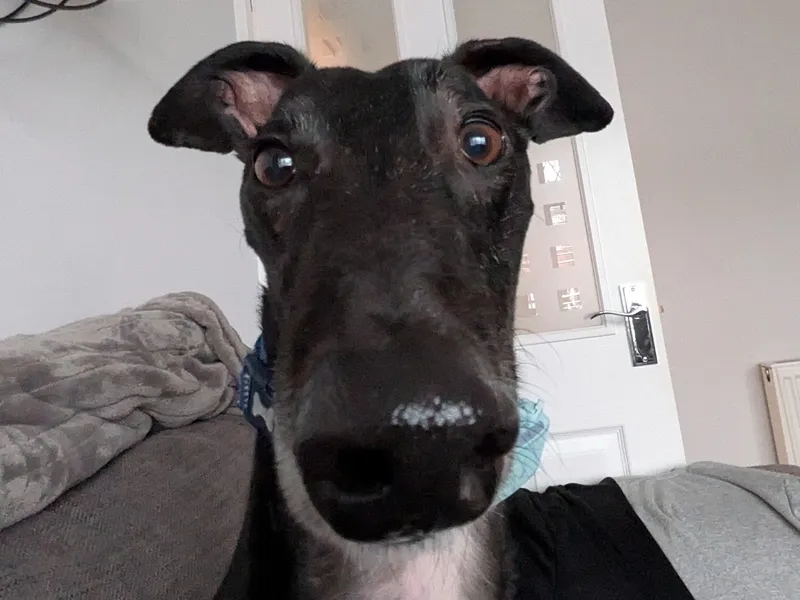
Their eyes!
Photos do a better job of explaining this one.
You’ll get to join the greyhound community
“Cult” might be a more appropriate word.
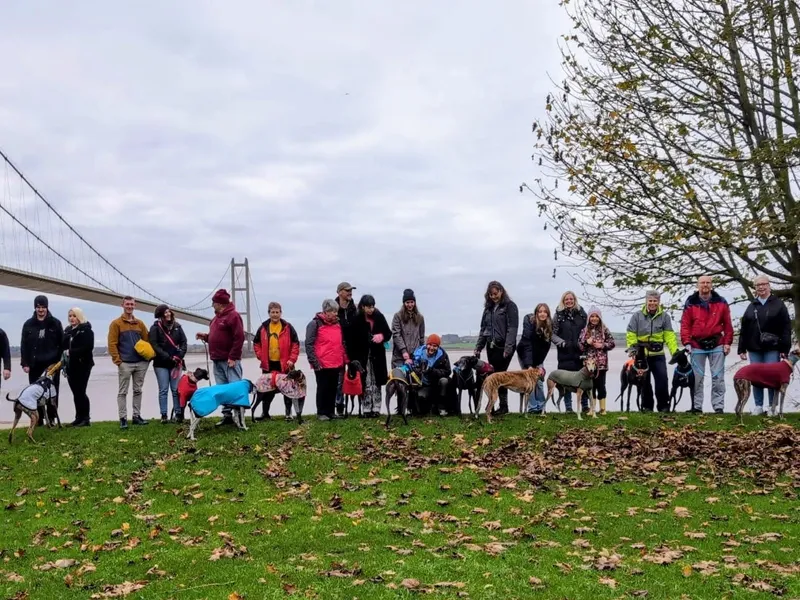
If you adopt a greyhound, be prepared to meet a whole group of people who are obsessed with this breed. Many rescues and rehoming centres will organise greyhound group walks, where you will meet other owners and spend the whole time gushing over your beloved dogs, while the hounds awkwardly sniff each other and get tangled up in each other’s leads. It’s the best.
Adopting saves greyhounds from life in kennels, or even worse
When a greyhound’s racing career ends, they are no longer useful to the racing industry, at which point they are “retired”. Some racing greyhounds are kept as pets by their trainers or owners, or rehomed directly by their trainers or owners, but the majority are passed over to adoption groups for rehoming. There are thousands of greyhounds retired annually in the UK, with some sources indicating as many as 5,000 in need of rehoming each year.
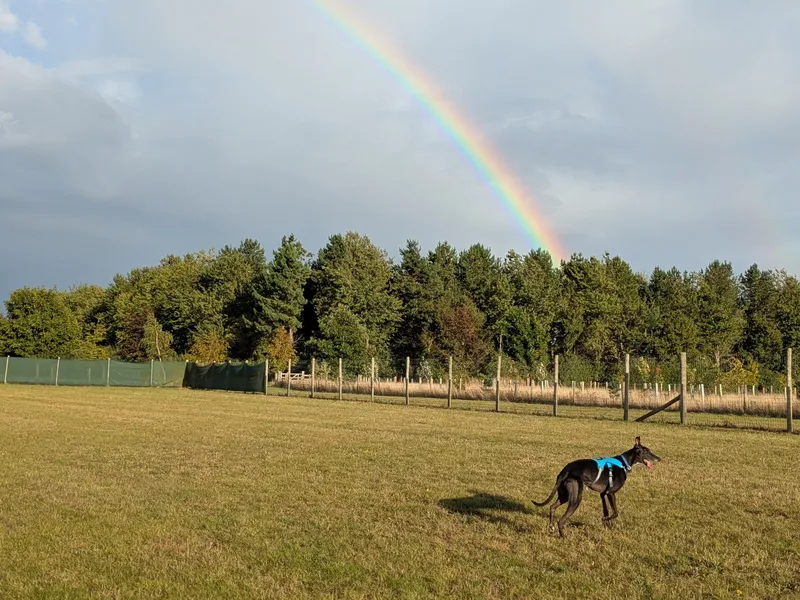
In theory, greyhounds go straight from racing kennels to adoption kennels to their “forever home”. However, the unfortunate fact is that many greyhounds spend a long time in that middle part, waiting for the right person to adopt them. In Winston’s case, he was waiting for around a year in rescue kennels before we adopted him. Like many other large, black, male greyhounds, he was overlooked for far too long before he found his home (read more about “black dog syndrome” here).
On top of this, 2024 retirement data from the Greyhound Board of Great Britain (GBGB) indicated that 94% of dogs leaving racing in 2024 were “successfully retired” (rehomed, returned to owner, or other monitored outcome); the remaining ~6% (350-400 dogs) saw unconfirmed outcomes or euthanasia on welfare grounds. We won’t get into the ethics of the racing industry here, as it is far too big of a topic, but unfortunately there are greyhounds who find themselves abandoned, in poor health, or even exported abroad for nefarious purposes.
Ultimately, there are so many greyhounds in need of a loving home, so if you’re considering adopting a dog - consider a greyhound!
You’ll be rewarded with the deepest, most special bond
Greyhounds are not (typically) as forward or affectionate as many other dogs. They can be very aloof and independent, or even very anxious, sometimes taking months to come out of their shell. They can show affection in subtle ways, such as leaning against your legs, gently wagging their tail, or sighing heavily when you sit down next to them on the sofa.
Their reserved nature is exactly why it’s so rewarding when they do finally bond with you, because it feels truly earned, not just a given.
Making sure a greyhound is right for you
The purpose of this page is to highlight why greyhounds make such excellent companions, but it would be disingenuous of us to suggest that they are the perfect breed for everyone. If you’re considering adopting a greyhound, make sure to check out more of the resources on our blog to understand if they’re a good fit for your lifestyle.
If you’re looking for a super high energy dog to take on multi-day hiking trips and train for obedience competitions, an ex-racer probably isn’t the right choice for you - but then again, greyhounds are surprisingly adaptable!
Considering adopting a greyhound?
The Greyhound Hub is not affiliated with any rescue or rehoming centre, or racing kennels of breeders. This means we can’t help you adopt directly, but we can help you make an informed decision.
If you’re serious about adopting, look for greyhound rescues near you. There are more than 100 in the UK, and no shortage of greyhounds waiting for homes. If you need a hand with where to look, what questions to ask, or anything else at all, please do get in touch.
In the future we will be publishing a helpful guide on where to adopt a greyhound - stay tuned!
FAQs about greyhound adoption
For more answers to common questions, make sure to check out our complete greyhound FAQ.
The main downside of owning a greyhound is that you’ll probably find yourself with a lot less space on your sofa and/or your bed!
We’re obviously biased, but ask any greyhound owner and they’ll tell you that the pros far outweigh the cons. However, it’s worth being aware that an ex-racing greyhound may come with some unique challenges, many of which can be overcome with time, patience and lots of love. For example:
- Prey drive: They are bred to chase small furry things, and ex-racers in particular have had this instinct drilled into them. This can be managed, but it isn’t something you can “train out”. For some greyhounds, this means never being let off-lead in public places. It also means that some greyhounds are not suited to living with cats or small dogs.
- Low stamina: If you’re looking for a dog to take on full day hikes or long distance runs, this probably isn’t the breed for you. There are exceptions, though.
- Lack of socialisation in ex-racers: There are actually a lot of exceptions to this one, as plenty of greyhounds are very happy in busy environments, love meeting new people and get along great with children and other dog breeds. However, some greyhounds may take a while to feel comfortable after moving into your home, particularly if you live in a very busy urban environment.
- Fragile: Their paper thin skin, gangly limbs and ability to run at high speeds can be a recipe for disaster. Be prepared to find random cuts after enthusiastic play sessions, and make sure to use muzzles if they play with nippy dogs (an excited nip can easily turn into a nasty skin tear).
The 3-3-3 rule is cited a lot in the rescue dog community. In short, it means:
- 3 days to decompress
- 3 weeks to learn the routine
- 3 months to feel secure
It is completely normal for some hounds to take longer to adjust. For our first greyhound, it was more like 3-4-6! He settled into home life remarkably quickly, but it was at least 6 months before we felt like we had actually “bonded”. It was nearly a year before he got comfortable on walks, and even now he experiences anxiety from time to time.
Every hound is different, so take the 3-3-3 rule with a pinch of salt.
There are thousands of greyhounds retired annually in the UK, with some sources indicating as many as 5,000 in need of rehoming each year. For this reason, greyhounds are one of the most commonly seen dog breeds in rescue and rehoming centres.
Unfortunately, many people overlook greyhounds as they assume that they need lots of exercise, or they’re dangerous, or they’ll be difficult to train… But if you speak to any greyhound owner, or check out more of the resources on our blog, you’ll quickly see that greyhounds make excellent companions.