Understanding and managing prey drive in greyhounds
- Abby
- Socialisation , Get To Know Greyhounds , Training Tips
- 25 Oct, 2026
Prey drive refers to a dog’s natural desire to hunt, catch and consume prey. Given their genetics and background, ex-racing greyhounds tend to exhibit higher-than-average prey drive. This is important to be aware of if you’re considering adopting a greyhound (or any sighthound), but also not something to be afraid of!
This article will cover what to expect if you’re adopting a high prey drive greyhound, and how to manage it so you can both live your best lives.
TL;DR
Prey drive is a greyhound’s natural instinct to chase, and it’s not the same as reactivity or aggression. Ex-racing greyhounds often show it more strongly, and it doesn’t always appear straight away - it can take weeks or months to surface once your hound settles into home life. With the right equipment, muzzling and training (such as predation substitute training), prey drive is very manageable day to day, and shouldn’t put you off adopting a high prey drive hound.
What prey drive actually looks like day to day
You may see signs of prey drive in your greyhound when encountering certain animals, particularly small furries like rabbits, squirrels and cats. In some cases, this can also extend to smaller dogs, especially fluffy, fast-moving ones. Common signs of prey drive to look out for include intense staring, stiff body language, teeth chattering, jumping/lunging, barking, whining, trembling, chasing, impossible to distract.
| What prey drive looks like | What safe looks like |
|---|---|
| Stiff body language | Loose, relaxed body language |
| Upright, fast wagging tail | Loose, waggy tail |
| Intense staring at the other animal | Shows interest in the other animal but does not fixate |
| Frustrated jumping, whining, teeth chattering, drooling, when waiting to approach other animal | Shows interest in the other animal but remains calm |
| The dog continues to fixate, even if you try to distract by calling their name, whistling, treats, etc | The dog is easily distracted |
| Lunges, chases or attempts to bite the other animal | Politely greets the other animal, for example gentle sniffing |
An example of prey drive in action
The best way I can describe it in Winston’s case: if he spots a squirrel, rabbit or cat, it’s as if he turns into a coiled spring, and you can practically feel the tension radiating off him. He doesn’t make any noise but goes very, very still. If the animal gets too close, he jumps like crazy!
Unfortunately (or fortunately, because he’s been so good recently), I don’t have any videos of Winston jumping/lunging. But I do have a video here of a recent squirrel-spotting, where you can see his tense body language and excitement.
The first time Winston’s prey drive kicked in, we were massively caught off guard, despite having researched prey drive thoroughly. It’s like a switch had flipped out of nowhere. When he gets into that zone, it’s like he’s a different dog, and nothing can snap him out of it - though we are working on that!
Prey drive vs reactivity vs aggression
This is really important: prey drive is not the same as reactivity, and it is not aggression. It is also not “bad” behaviour. Your dog is literally doing what it has been bred and (in the case of ex-racers) trained and encouraged to do. Centuries of genetics and deliberate breeding are driving this behaviour.
In our case, I would never describe Winston as a “reactive” dog, even though he might jump and spin around at the sight of off-lead dogs running around. This behaviour is not rooted in fear, but in a desire to chase.
I also wouldn’t describe him as “aggressive”, even though he’s been known to try and nab small fast-moving dogs and cats that get too close to him. Again, he’s not being driven by negative emotion like fear or insecurity; the thrill of the case is fulfilling for him.
Ultimately, you shouldn’t “punish” prey drive, or attempt to “train it out”. You should learn to manage and work with these instincts, not against them. That doesn’t mean letting your greyhound chase or do what it likes! I won’t get into it in lots of detail in this article, but I highly recommend checking out Simone Mueller’s Predation Substitute Training to learn more about this topic.
What you should know before you adopt a high prey drive hound
My hope is that most rescues are upfront and honest about the reality of adopting a high prey drive greyhound. However, I do see a fair amount of “sugar-coating” in the community, with many owners suggesting that all greyhounds are gentle giants who wouldn’t hurt a fly as long as you tell them “no”, or advising that their prey drive will disappear after a year or so.
The last thing I would want is to discourage a potential adopter, but I also think everyone should be aware of the potential realities and what it means for you as an owner, While prey drive is generally easy to manage once you get the hang of things (see more in the next section), it can also present some challenges, for example:
- Extra vigilance on walks: I promise you get used to this after a while, but be prepared to keep your eyes peeled at all times when out and about! Ideally you want to spot any triggers before your hound does, so you can react appropriately.
- Management around smaller dogs: While greyhounds will become more socialised over time, if your hound’s prey drive extends to small dogs, it can make interactions a bit trickier to manage. For example, I never leave my greyhound unmuzzled/off-lead with my sister’s (much smaller) dog, even in the house.
- Limited off-lead opportunities: This applies to all greyhounds, not just those with high prey drive, but worth reiterating: the vast majority of greyhounds should be kept on a lead while out in public.
- If you have limited mobility or strength: Managing a 25-40kg greyhound who is lunging and spinning around may present a challenge. Of course they won’t all do this, so it’s just a case of adopting a hound who’s right for you.
- Learning to work with prey drive: Waving treats in front of your dog’s face or telling them off when they try to chase something simply won’t cut it for most high prey drive hounds. In many cases, you’ll need to work on deep bonding and engagement, and explore techniques like predation substitute training. I actually see this as a positive thing in terms of bonding with your hound, but it’s worth acknowledging the time and effort it requires.
As with any dog, prospective greyhound adopters should be prepared to adapt their routine to ensure their dog - and other pets and wildlife - are safe and happy.
Keep in mind that prey drive is not always obvious or apparent in rescue greyhounds! While greyhounds are often “tested” for prey drive prior to adoption, there is no regulated process for this and some greyhounds will be better socialised than others. In Winston’s case, he was good as gold on walks during the first few weeks, then the jumping/lunging at every moving object began 2-3 weeks in. This is why it’s recommended to keep your new hound muzzled on walks until they’re settled and you have a true idea of their personality and prey drive.
How we manage it, day to day
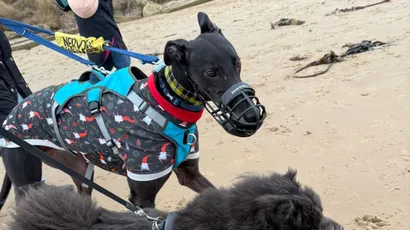
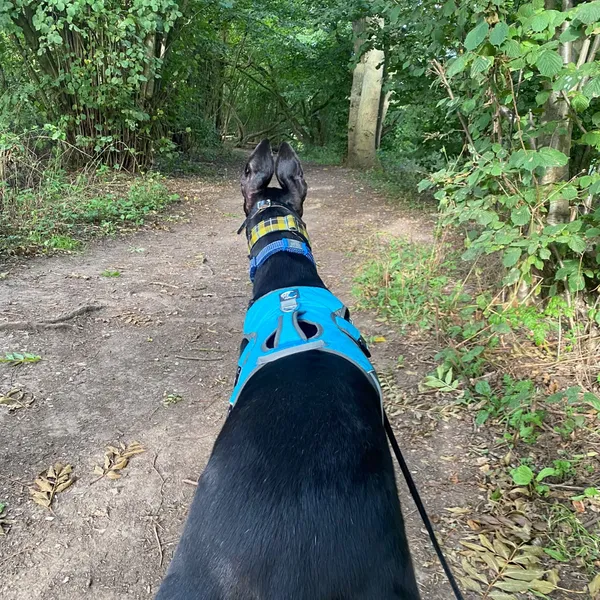
- Good equipment: Winston wears an escape-proof harness from Dry Dogs and a martingale collar, plus a double-ended lead. When he jumps, we have full control, and his neck does not get yanked about.
- Holding the lead correctly: A small thing, but easily one of the most important: put one hand through the loop (so it’s around your wrist), then hold onto the lead just below the loop. If you ever get startled or yanked so hard that you let go of the lead, the loop should tighten round your wrist so you don’t drop it altogether.
- Muzzling: Ex-racers are used to wearing muzzles. If fitted correctly, they are perfectly happy wearing them. Winston wears a muzzle on walks, just in case he gets rushed by a small fluffy dog or a cat gets too brave (it happens). Read more about the benefits of muzzling here.
- Regular off-lead time in a secure field: Winston loves to run, so we hire a freedom field once or twice a week for him to stretch his legs and have off-lead time.
- Avoid busy places until we’re ready: It’s not a fun walk for anyone if we go somewhere with tons of small dogs running around off-lead, balls being thrown, kids screaming, etc. Winston quickly gets over-excited, which then turns to frustration and overwhelm.
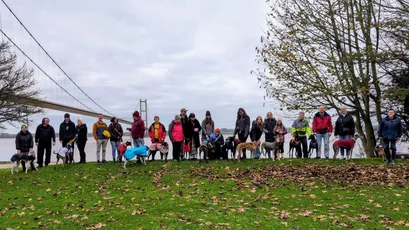
- Group greyhound walks: Winston is much calmer in a pack, and we reckon (hope) that the behaviour of other, calmer greyhounds is gradually rubbing off on him.
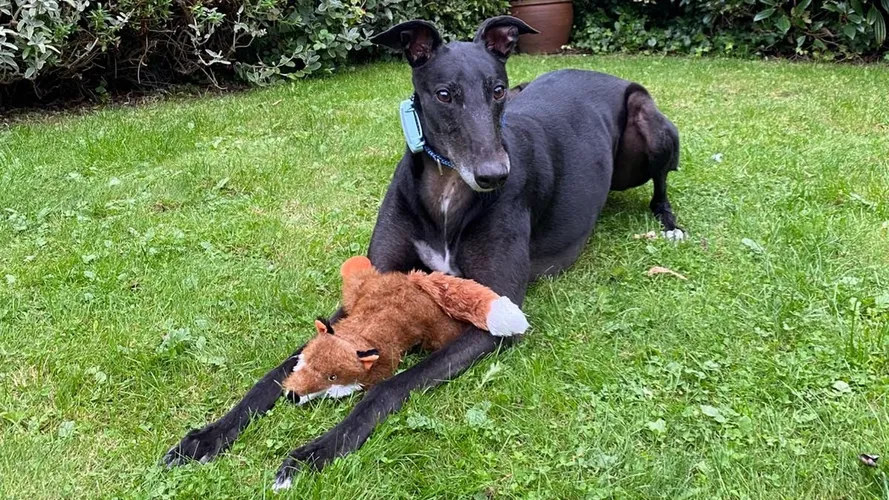
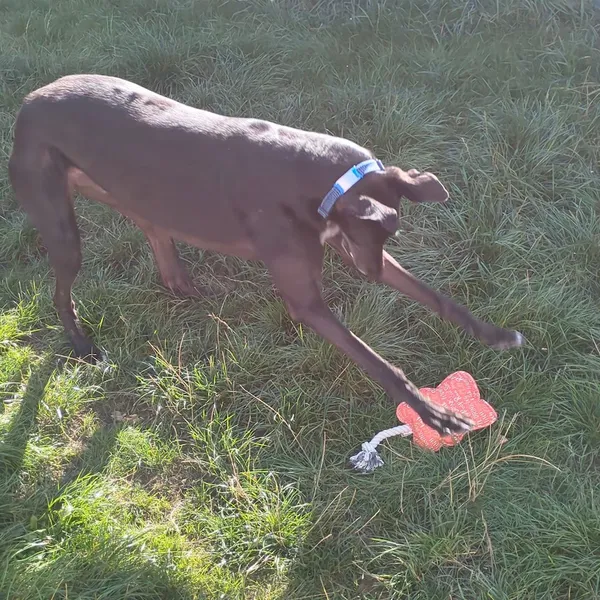
- Predation substitute training: Allowing him to fulfil his natural urges while keeping him and the wildlife safe. This includes breed-specific enrichment activities like playing with flirt poles and giving him things to rip up. We call this “enripment”.
Living well with a high prey drive hound
While we want to be realistic about what it’s like to adopt a high prey drive greyhound, I also want to reassure readers that it typically shouldn’t be a deal-breaker. If you adopt from a reputable rescue, they should provide the guidance as needed.
To put it this way: when we originally adopted, our main deal-breaker was a high prey drive hound. We weren’t too bothered if he wanted to chase squirrels and rabbits, but we were really keen for him to be safe with small dogs, due to family and friends’ pets.
Christmas might be a pain in the arse, but it’s absolutely worth it - he’s the best dog ever.
Should you adopt a high prey drive greyhound?
Adopting a high prey drive hound may sound a bit daunting, but I wouldn’t let this put you off. At the end of the day, if you want to adopt an ex-racing greyhound (or any sighthound), you should expect a certain amount of prey drive! While it can be an adjustment to learn how to manage these instincts, it quickly becomes second nature, and with a little time and effort you will quickly see the behaviour improve on walks.
To put it this way: unless there are physical reasons why you feel you would struggle to manage a high prey drive hound, I wouldn’t let this influence your decision too much. I’d place more focus on finding a hound that matches your routine, lifestyle and personality.
Oh, and if you own a cat or pet hamster…you may want to think twice. But I’ve heard lots of stories of ex-racers living happily with all kinds of other pets, so who knows!
FAQs
Every greyhound is different. Some greyhounds will show zero interest in small dogs, but they will go crazy for cats. Most will have a weakness for small fluffies like rabbits and squirrels, meanwhile some couldn’t care less about any of these. Some will extend to birds, some won’t care about birds at all, some will only be interested if the bird is flying close to the ground. Some will only take notice if the “prey” animal is moving, while others won’t need that much encouragement. For some, prey drive will even kick in for inanimate objects, like a plastic bag or leaf being pushed around by the wind!
In short: it could be anything or nothing. It depends on the dog.
No, prey drive cannot be “trained out”. It is a genetically hardwired trait that you must learn to manage. Yes, training can help to manage, but you’ll never make this behaviour disappear.
Here are some of the best toys for greyhounds with high prey drive, based on our experience:
- Flirt poles: Long poles with a toy/lure attached to the end. Great in a bigger space, and will tire enthusiastic hounds out very quickly.
- Tug toys: Similar to flirt poles, but shorter and designed for “tug of war” style games.
- Tearribles (or similar): Toys that can be ripped up safely by your hound. A cheaper, non-toy option is a cardboard box filled with paper that can be safely shredded.
- Bouncy balls: Winston goes crazy for any bog-standard ball, and one that squeaks is even better. Keep in mind that fetching is hard on the joints for dogs - try rolling instead and keep sessions short.
Note: Don’t be surprised if it takes a while for your greyhound to develop an interest in some toys. Some ex-racers will initially show little enthusiasm, then once they are more settled, they’ll get more into it. It took Winston several months before he warmed up to actually playing with toys (rather than immediately just ripping them up!).
Being completely honest, if you have limited mobility or strength/grip issues, a 25-40kg dog jumping and spinning around may present some issues. In this case, I’d seek out a hound who is on the calmer side.
However, as a 55kg woman of average height who isn’t particularly strong, I’m able to manage Winston surprisingly easily. If you’re a woman, don’t be put off by the larger hounds - with the right gear you can handle just about anything!
Share :