Kennel coat: why does my new greyhound smell?
- Abby
- Settling In , Health and Nutrition
- 16 Aug, 2026
If you’re wondering why your newly adopted greyhound has rough, flaky fur and a damp doggy smell about them: do not fear! This is perfectly normal and known as kennel coat. In this article you’ll learn more about kennel coat and how to transform it to sleek and shiny in just a few months.
TL;DR
Newly adopted greyhounds often arrive in your home with a strong doggy smell and rough, dull fur known as kennel coat. They typically shed this coat within a few months as they adapt to living in a warmer home environment. You can speed up the process and improve their coat’s shine in a few ways:
- A gentle bath on arrival
- Regular brushing with a gentle silicon brush
- Dietary supplements such as fish oil
- Massaging them with coconut oil and other pet-safe moisturisers
The most important thing is that your hound is happy and healthy. With time and patience they will settle into their new home and start to shine!
What is kennel coat in greyhounds?
Kennel coat refers to the dull, thick, sometimes patchy coat that you’ll often see on newly adopted greyhounds. Greyhounds develop this thicker coat while living in kennel environments in order to stay warm. It can also be worsened by factors such as poor diet and a lack of regular brushing.
Kennel coat can be accompanied by a “doggy smell” in your newly adopted greyhound, again a symptom of living in kennels.
How long does it last?
Greyhounds typically take a few months to fully “shed” their kennel coat, but you’ll normally see improvements (particularly with regards to smell) after just a few weeks at home. It may get worse before it gets better, as the sudden transition to living in a home can trigger some intense shedding as they adapt to the warmer environment.
Don’t be surprised or concerned if some hair never grows back fully - bald thighs in particular are very common in greyhounds.
Kennel coat vs normal shedding
Kennel coat and shedding overlap, but they are distinct conditions. We’ve summarised the key differences below:
| Kennel coat | Shedding |
|---|---|
| Present from day one at home | Typically flares up during seasonal transitions |
| Fur appears thick, dry, tufty and patchy; dandruff is also common | Fur and skin look healthy, but there’s more loose hair than usual |
How to get rid of kennel coat?
A good bath
It might feel a bit mean to give your greyhound a bath as soon as they arrive home, but it will really help to reduce that damp, doggy, straight-from-kennels smell. If they’re extremely anxious, don’t force this on them, but otherwise it’s good to get it out of the way.
Make sure to use a gentle shampoo and give them lots and lots of praise and treats for that first bath!
Don’t be tempted to keep bathing them to try and make the kennel coat go away. Greyhounds actually need bathing very infrequently, and too often will dry out their skin and make things worse.
Regular brushing
Regular brushing should be part of any greyhound’s routine, so start as you mean to go on. We’d recommend a soft silicon dog brush to help loosen dead skin and loose hair. Wire brushes and deshedding blades are typically too harsh for a greyhound’s short, single coat and thin skin.
Try to give them a good brush once a day for those first few weeks, but again, don’t force this on them if they’re very anxious or seem uncomfortable.
Diet and supplements
It’s typically recommended to keep feeding your greyhound the same food for their first month or so at home, as a sudden change in diet may lead to tummy troubles, adding extra stress during the transition period. However, there are things you can incorporate into their diet to help their coat and overall wellbeing:
- Fish oils: We give our hound salmon oil every day with his breakfast. He loves it, and we get so many compliments on his shiny coat! It also supports joints and heart health.
- Food toppers: Keep their base meal the same but consider occasional toppers like tinned sardines, boiled egg and oats.
- Supplements: You can try tablets/capsules with ingredients such as fish oil, vitamin E and flaxseed.
Moisturise their skin
If your hound is comfortable with it, you can massage coconut oil or other pet-safe skin creams into their skin and fur. This can help with the dry and flaky skin.
Give it some time!
Your hound’s coat should improve after a few weeks of living at home. After a few months, you will look back at photos from the early days and be shocked at the difference! It won’t happen overnight, but their coat will gradually go from dry and dull to sleek and shiny.
See a vet if your hound suffers from persistent smell and dry skin even after trying the above tips, or you notice other skin issues such as sores, significant hair loss beyond thighs, or excessive licking/itching.
Before and after
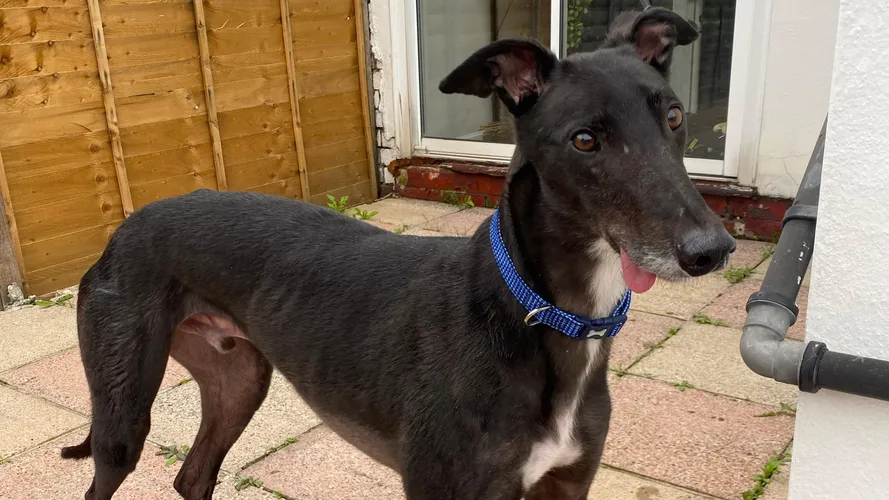
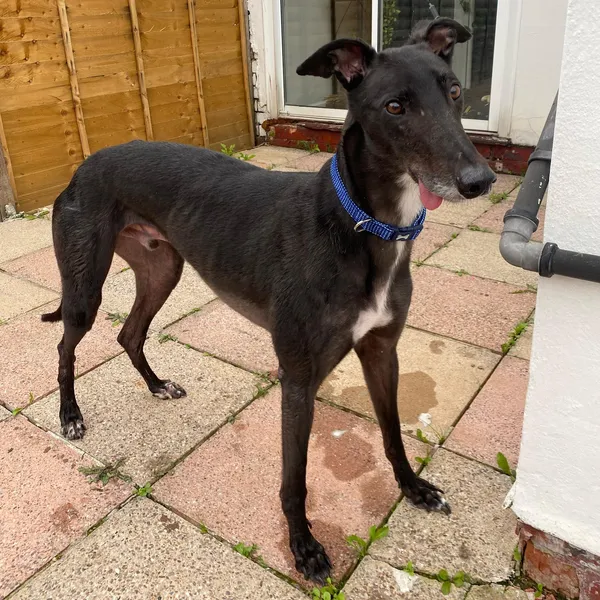
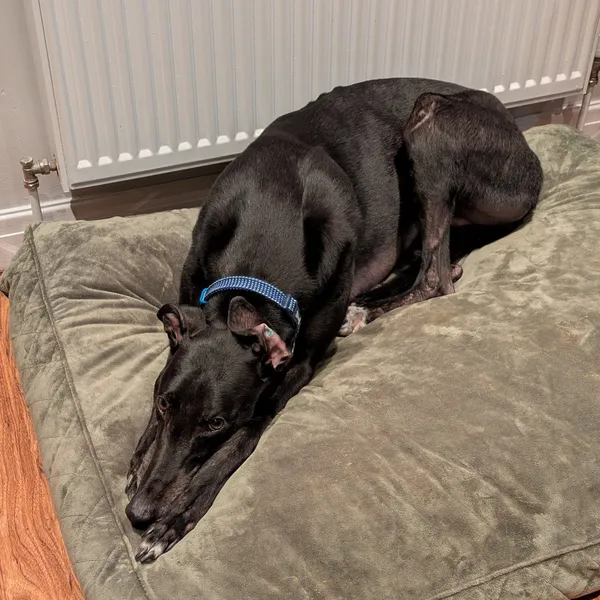
We’ve attached some photos below of our own greyhound’s kennel coat transformation. The first photo was taken straight after he came home, and the second was just a few months later.
Got more questions about your newly adopted greyhound?
Check out our blog for more resources on looking after your grey, or feel free to get in touch if you have a specific question we haven’t covered yet.
Share :